
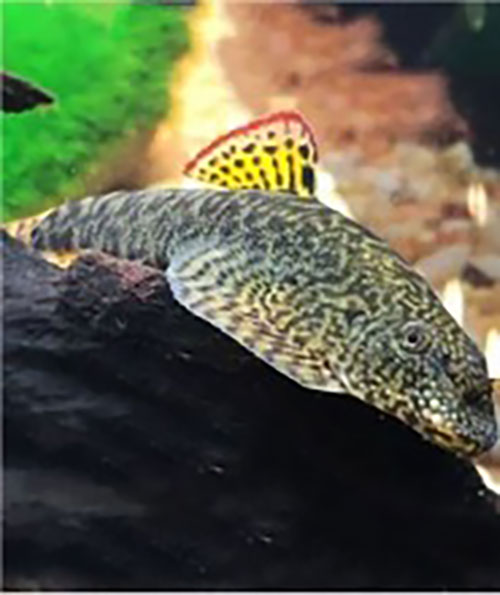
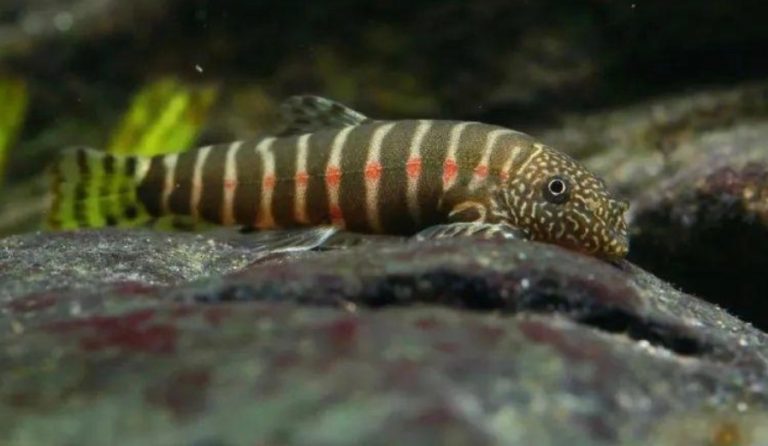
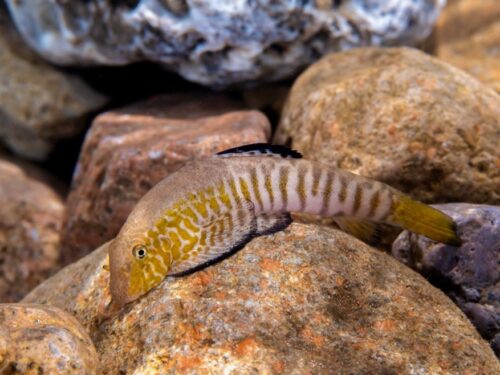
Erromyzon Compactus Type 1/Red Spots

$29.99

Hillstream loaches are hardy fish once they have acclimated to aquarium life. These creatures have adapted their entire underside (besides tail) into a suction plate. They have diminished swimbladders and their mode of movement is novel in fish: they crawl like an amphibian or reptile rather than swim or wiggle.
Description

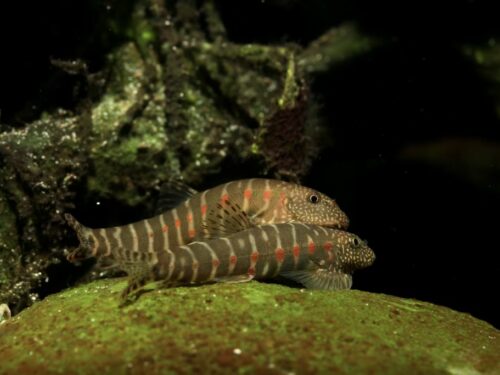
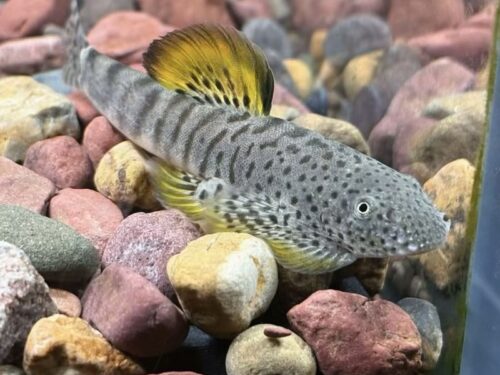
Scientific Name: Erromyzon compactus (Kottelat, 2004)

Chinese Name: 壮体游吸鳅 模式种

Common English Name: Red Spots Hillstream Loach

Natural Range: Guangxi & Yunnan, CN; Northern Vietnam

Stock Pedigree: “Guilin, Guangxi”

Husbandry Notes: Easy/Intermediate Care

Hillstream loaches are hardy fish once they have acclimated to aquarium life. These creatures have adapted their entire underside (besides tail) into a suction plate. They have diminished swimbladders and their mode of movement is novel in fish: they crawl like an amphibian or reptile rather than swim or wiggle.
Housing all hillstream loaches is the same and quite simple: provide an unheated, room-temperature aquarium (65F-80F) with a hearty layer of substrate (a 1:1 mix of sand and smooth river pebbles works well, at least 2.0″ deep. Mix in a bag of ceramic rings for bacteria to colonize). Sharp objects are to be avoided, as the loaches will damage themselves. Decorations may include smooth stones, live plants, unglazed pots and pleco caves. Excessive flow is not a requirement for hillstream loaches; however, aeration is needed. A sponge-filter with a strong bubble will suffice and provide mechanical filtration. An immature aquarium, without ample algae and biofilm, will risk the fish’s health. During waking hours, the loaches will bask, graze, and socialize in the daylight. Provide a strong light for at least eight (8) hours a day to encourage algae growth in the aquarium (and entice the loaches to show their best colors). Weekly water changes also help encourage displays and mating behavior. The fish are highly social in the wild; 6-12 individuals is the recommended minimum school-size.

Algae and meaty foods are the main dietary components for hillstream loaches. Our loaches eat a diet of Hikari Algae Wafers, Fluval Bug Bites and freshly hatched Artemia nauplii larvae (“live baby brine shrimp”). Frozen foods like blood worms or Mysis shrimp are also accepted without hesitation.

Appropriate tankmates could be blue-eyes or rainbowfish, bitterlings, ricefish or halfbeaks. If breeding is desired, do not house with other types of bottom-dwellers like dwarf gobies; hillstream loaches from another genus are perfectly fine, as the fish will not hybridize.

Breeding Notes: Strategy II family (see below).

All hillstream loach species will continuously spawn (with minimal effort) if kept well-conditioned, appropriately housed, and provided excellent fish husbandry. Two breeding strategies are utilized by hillstream loach families: an “egg-releasing” (Strategy I) and an “egg-burying” (Strategy II) approach. Once fry have emerged, they are skittish and ignored by adults, in all families. Eggs are also ignored by adults. After a year or two, it is not uncommon for there to be upwards of four or five generations of loaches in a breeding colony.

Strategy I Families: “butterfly” lineage Beaufortia (Sewellia look-a-likes), Engkaria, Gastromyzon, Hypergastromyzon, Neogastromyzon, Parasewellia, Protomyzon (Yaoshania), true Sewellia, & Sinogastromyzon.

Strategy I: involves releasing eggs and milt (fish sperm) into the open water-column after some courtship displays. Sticky, fertilized eggs wash downstream and secure themselves between crevices in large river stones or mix into the streambed. In the home aquarium, the loaches will ignore their spawn and tend to naturally mix their eggs into their substrate while foraging, or gradually knock the eggs into corners of the aquarium where detritus collects. Life for the Strategy I loaches begins in these “malmy” corner piles–a perfect first meal for baby hillstream loaches. Excessive gravel vacuuming, or removal of malm from a breeding colony’s tank will negatively impact their reproduction. Although it may seem counterintuitive, the loaches benefit from having some detritus in their aquariums.

Strategy II Families: “chameleon” lineage Beaufortia (Pseudogastromyzon look-a-likes), Erromyzon, Labigastromyzon, Paraprotomyzon, & Pseudogastromyzon.

Strategy II: mating pairs will use their elongate tails to clear caves beneath smooth river stones. Females slide backwards into the cave where she adheres her eggs to the ceiling. Afterwards, the male quickly slips in, backwards as well, and sprays his milt into the chamber. The cave is brushed shut, and the fry emerge some weeks later (after feasting on detritus in the substrate).

Reviews

There are no reviews yet.

Be the first to review “Erromyzon Compactus Type 1/Red Spots”

Your email address will not be published. Required fields are marked *