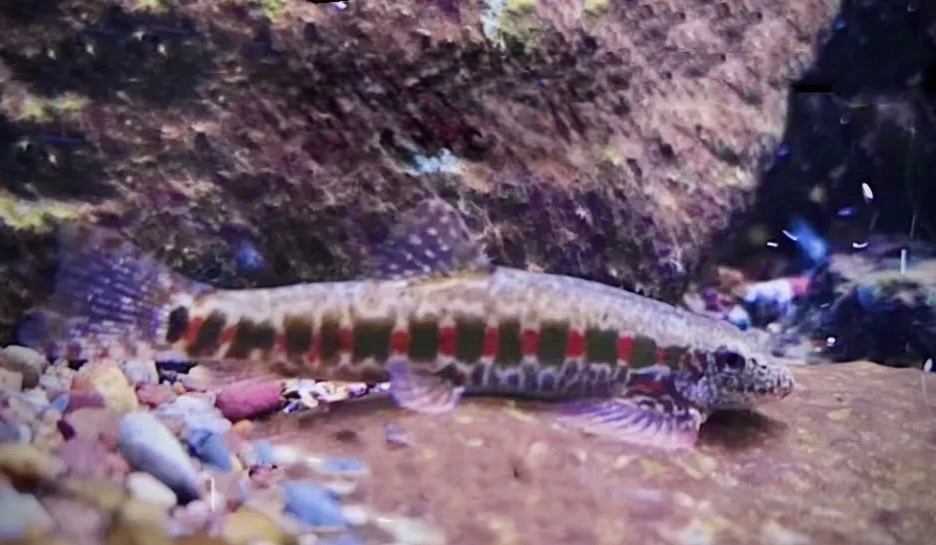
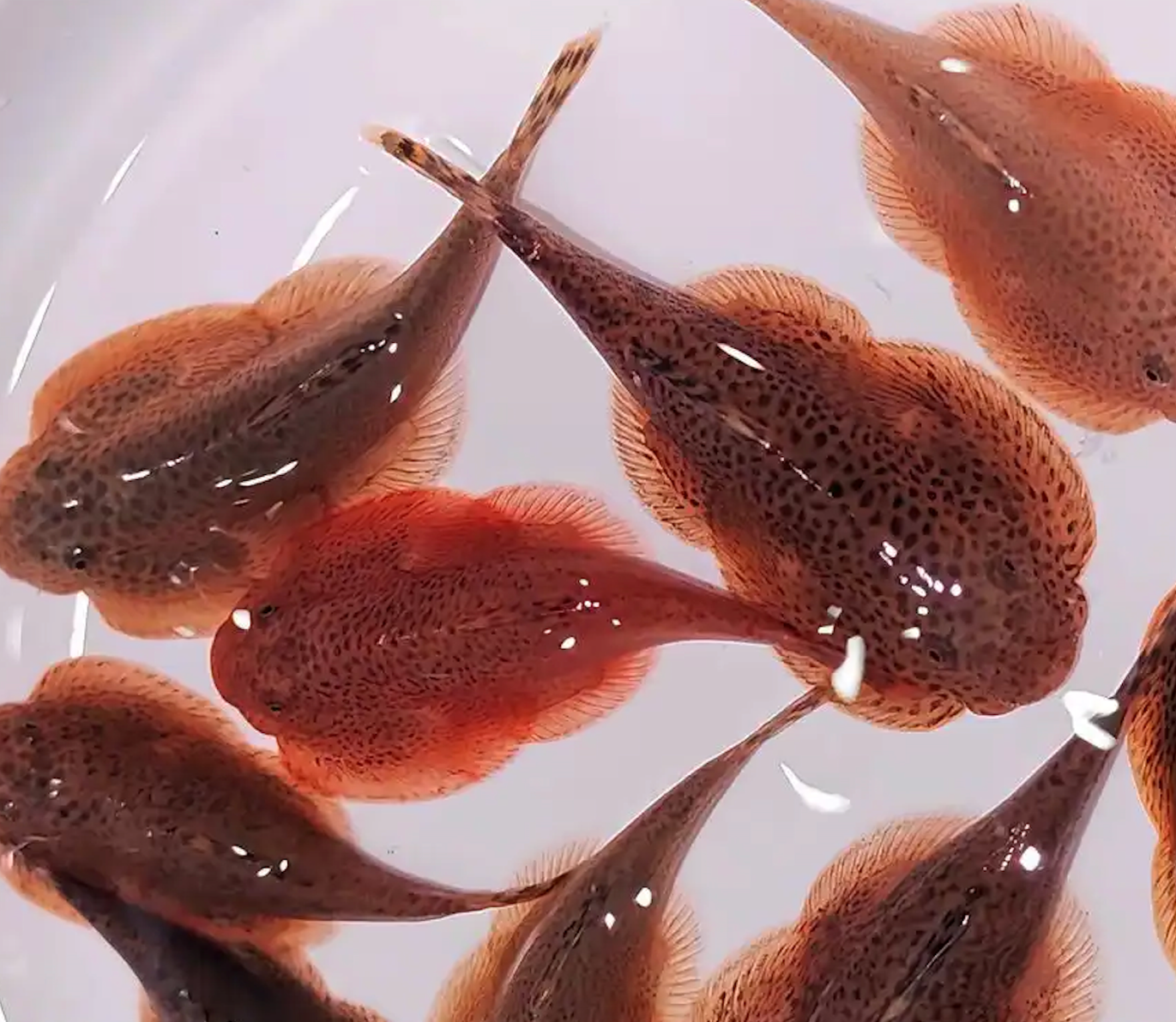
Guizhou Butterfly Hillstream Loach
Price range: $9.99 through $199.99
Beaufortia kweichowensis “Guizhou” $9.99-$199.99 *BY COLOR/GRADE/SIZE*
Common Name: Chinese Butterfly Hillstream Loach
Latin Name: Beaufortia kweichowensis (Fang, 1931)
“Moniker” or “Location:” “Guizhou”
Native Range: Guizhou, China
Broodstock Heritage: China (Wild); Imported by Hillstream Kingdom (ME, USA)
Adult Size: Males, 4.75-5.00;” Females, 4.00-4.50”
Breeding Strategy: Egg-Scatterer (read below)
Temperament: Very Peaceful
Care Level: Easy/Beginner
Description
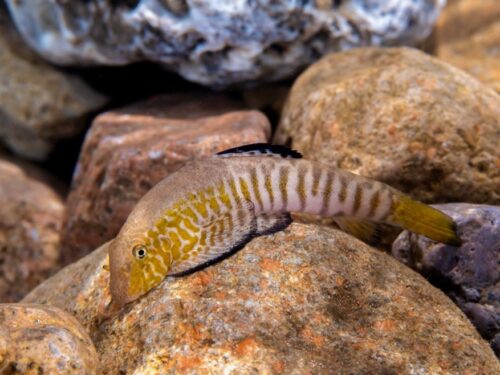
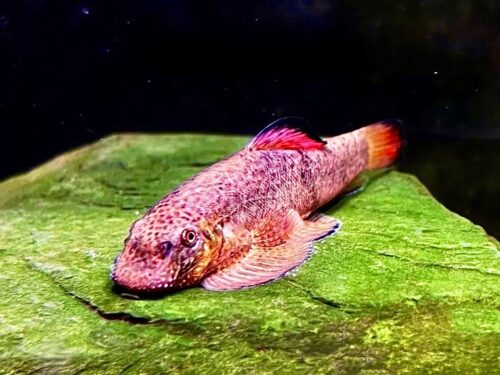
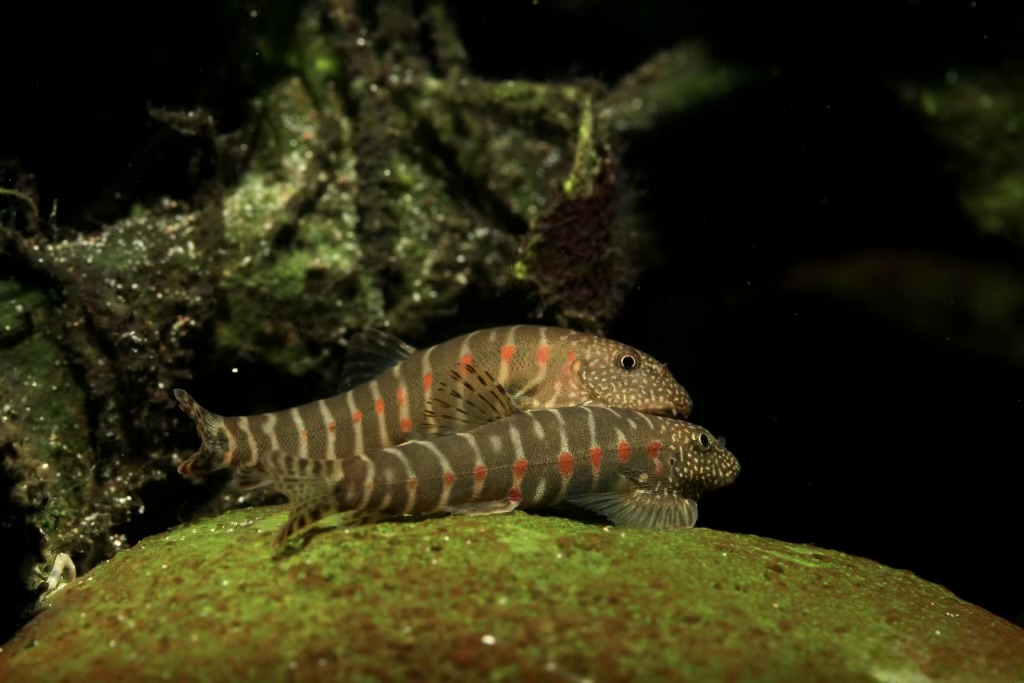
A classic, hardy beauty from Southern China. Ranging in color from pearly-white to watermelon-pink: we offer several color morphs––“Grades”––of the Chinese Butterfly Hillstream Loach, and occasionally… very rare individuals (mentioned below). The livestock for sale were collected in the dreamscape Province of Guizhou. “Orange,” “Red,” and the hyper-rare “Pink” phenotypes (all expressions of “erythrism;” the fish are basically gingers) occur randomly in most populations of this species. The populations around Guizhou often produce all three types of erythrism; the occasional school-bus yellow “Albino” or “Lutino;” “Patternless” individuals, also––spot density and shape are variable by the individual (and can be selected for); “Piebald” and the occasional “Melanistic” (jet-black) individual are occasionally available for special order. Easily breedable in the home aquarium, just make sure to provide higher current (25%-50% more than your average Hillstream Loach aquarium) and an abundance of smooth stones and unglazed pots––like other disc-shaped species enjoy. For those looking to develop their own line-bred varieties (var.) of Hillstream Loaches, we suggest working with this species: they have seemingly endless genetic potential which could be worked into countless, colorful breeds (over time).
*BY SPECIAL ORDER ONLY* Please contact us
Albino Size: S-XL: $499.99
Piebald Size: S-XL $499.99
Rubber Ducky/Lutino/Xanthic Size: S-XL $999.99
Pet Husbandry
Hillstream Loaches are a living dream, and very long-lived (10+ years)––like most loaches––and should be offered consistent, good husbandry. Looking like an AI creation, the muppet-faced undines, “water fairies,” are forgiving wards. Able to tolerate seasonal fluctuations in the unheated home aquarium (68F-76F) without issue, the fish quickly become comfortable in a proper setup.
Flexible in pH and hardness, the loaches are quite hardy: keep your aquarium’s conditions stable. Do not let ammonia, nitrite or nitrate accumulate in hillstream aquariums––the loaches are quite sensitive to poor water quality and quickly perish otherwise. Water oxygenation should be moderate-to-high; a hearty bubble from a sponge filter will perfectly suffice. Heaters are to be avoided with Hillstream Loaches, as they often lead to injury and mass death (due to several reasons).
Proper breeding aquariums should have 2”-4” of substrate at the bottom. We use a 2:1 ratio of “pool filter sand” to “smooth river pebbles.” The loaches utilize the substrate to forage; actively sifting through the sand and mouthing larger rocks to find edible detritus. Decorations should be smooth, without any sharp edges; absolutely no sharp plastic plants, etc.
We’ve found Hillstream Loaches enjoy piles of smooth stones; make sure to pre-wash and sanitize any new material entering your aquarium in hot water. We collect beautiful granite stones from our seaside here in Maine, which are very smooth, and the loaches love. We scrub the freshly-collected stones well and let them sit in a bathtub full piping hot water overnight. In the morning, we remove the stones and rinse them in cool water: they’re now safe to introduce to the aquarium.
Also offer the loaches various-sized, unglazed, terracotta pots from the garden center (Home Depot, Lowe’s, etc.). Some aquarium plants work well. In our experience, the Aroid-group aquatic plants have fared best––long-term––with loaches. Anubias, Bucephalandra, Cryptocoryne––and more––are wonderful choices. “Stem plants” tend to be dug up quite quickly, and clog filtration. Floating plants will inhibit water turnover and decrease oxygenation and flow; make choices which seem suitable for the loaches’ needs.
Feeding
In our care, the loaches’ diet consists of sinking, prepared foods (like Hikari Algae Wafers, Fluval Bug Bites, etc.) and quality live foods, specifically “live baby brine shrimp.” The loaches are grazers by nature, foraging for anything edible which fits into their tiny mouths. In nature the fish are “aufwuchs” (German word for “rock slime”) specialists. Algae on rocks is a microcosmos of life: masses of single-celled, photosynthesizing organisms––algae––and their predators, macroinvertebrates, combine to make a slime coat––aufwuchs. The fish graze on this natural algae wafer, receiving a balanced, complete nutrition profile (in the wild). In the home aquarium, we can stimulate algae growth by providing the aquarium with bright light for a minimum of 12 hours a day, with 14 being ideal.
Tankmates
Hillstream Loaches love the company of others. A minimum school size for a 10-gallon aquarium should be 4-6 loaches, with a maximum of 20-30. A 40-gallon aquarium can hold a lot of little undines. Do not co-house species from the same Genus. Cross-Genus housing is completely fine and encouraged for the fish’s enrichment. In nature, several colorful Genera are found in the same stream––like on Borneo. In the US home aquarium, beautiful, multi-Genera, breeding colonies of Hillstream Loaches are becoming commonplace in our sub-hobby.
The Hillstream Loach family (Gastromyzontidae) is extremely peaceful, to the point where they have no means of inflicting damage on each other. All Hillstream Loaches have tiny, downwards-facing mouths with almost no bite power. Do not cohouse Hillstream Loaches with fish which can actively nip at them.
We find that housing Hillstream Loaches and Gobies does not work long-term; the Gobies are aggressive towards the loaches, and the loaches will accumulate bite marks and damage. The Gobies also actively hunt Hillstream Loach fry, which appear as little worms to them. Nor do we house Hillstream Loaches with any cichlids, perch, catfish or stone loaches. Choose peaceful tankmates which won’t nip at the defenseless “hillies.”
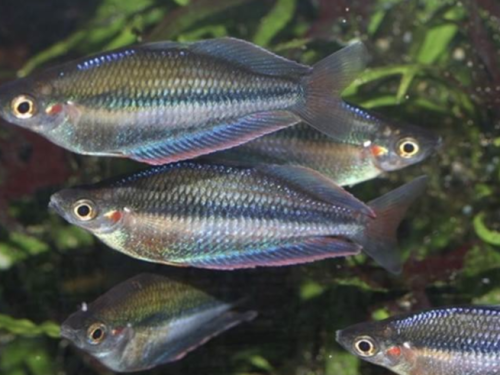
Our go-to choice for their roommates is the Gemscale Family (Atherinomorpha Infraseries; rainbowfish, blue-eyes, ricefish, lampeyes, halfbeaks, hardyheads, etc.). Shrimp are to be avoided, as they will eat freshly-hatched fry, but not their eggs. Live-bearing, ornamental snails (Brotia, Tylomelania, Viviparus, etc.) also do well with Hillstream Loaches long-term. Avoid egg-laying and “pest” snails––they are all pests (many also being invasive species) which spread disease and can easily over-run a tank!
Breeding
The Hillstream Loach family is known for two breeding strategies, depending on the Genus. “Disc-shaped” and “butterfly lineage” Hillstream Loaches (Gastromyzon, Sewellia, some Beaufortia, etc.) are “egg scatterers:” after some courting, the mating pair of loaches rise in the water column to release eggs and milt (fish sperm), which instantly fertilize and fall to the bottom of the aquarium. The current then blows the fertilized eggs into rock crevices or mixes them with the streambed. Some lazy Sewellia spp. will even lay their eggs into aquatic plants like some swimming fish do…
The second strategy developed by the Hillstream Loach family is “pit spawning:” pit-spawner Genera use their elongated tails to clear burrows beneath smooth surfaces to deposit their fertilized eggs; this behavior highlights the need for a proper substrate layer, should breeding be desired. Male Hillstream Loaches will choose a spawning area and actively circle it, while amplifying their colors and patterns, signaling to nearby females he is ready to breed. Several females may choose to enter his breeding site, where he will coax them into a breeding dance. In unison, the fish gyrate their tales and spray eggs and milt (fish sperm) into a pit; brushing it shut whilst also depositing the fertilized eggs, in one swift move.
Fertilized eggs––from both breeding strategies––require a minimum of 14 days to hatch. Fry will emerge once 0.1/8” (0.25cm); after another 14-30 days. Do not actively gravel vacuum your aquariums if breeding is desired; the baby loaches are also dependent on eating their parent’s waste to obtain probiotic bacteria for their developing gut biomes (needed to break down the heavy plant matter they eat).
Related products
-
- Out of Stock
Jakora Sparkles Rainbowfish
- Read more
-